
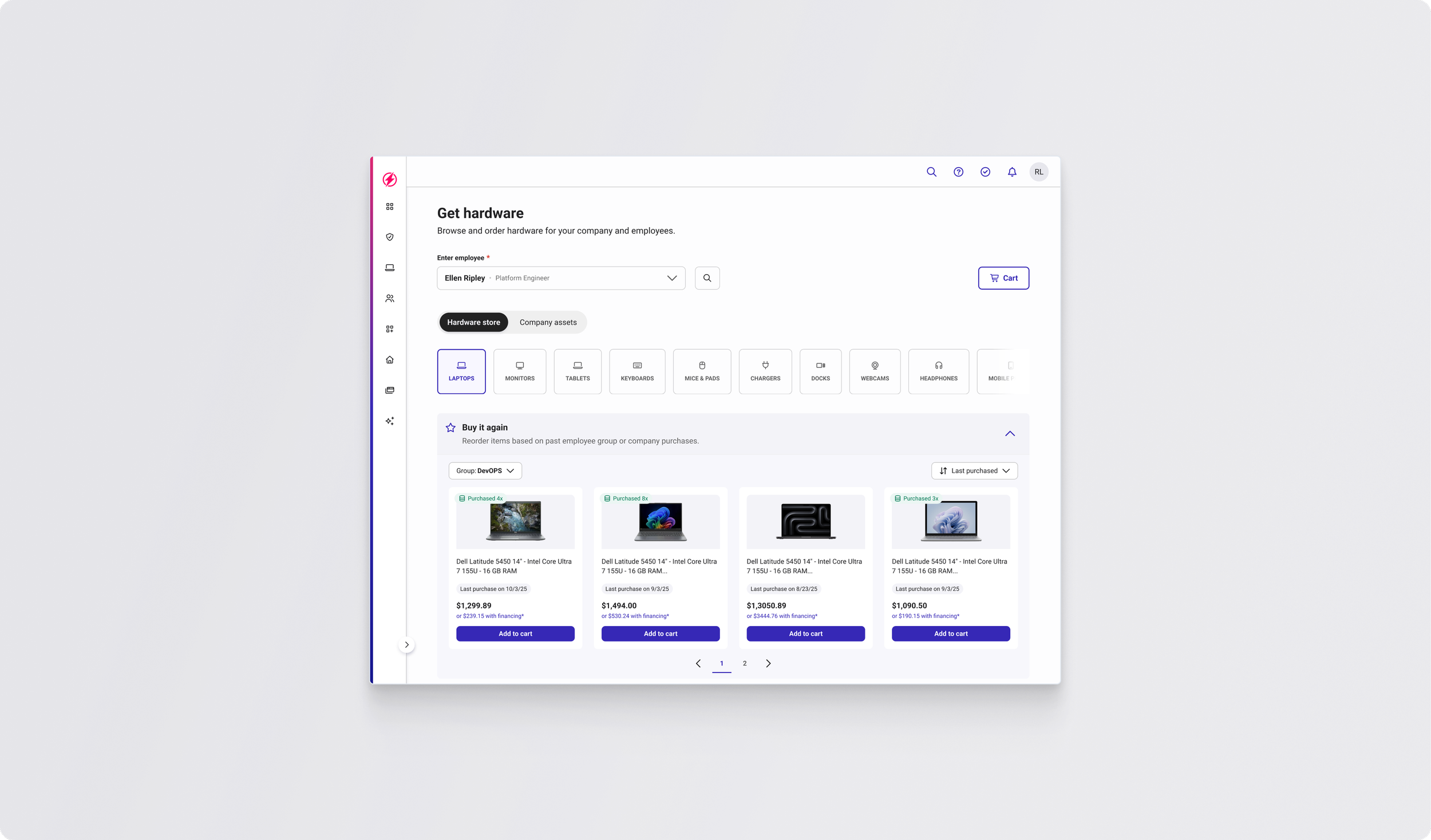
Improving decision confidence in enterprise device provisioning
OVERVIEW
As Electric’s customer base grew and device catalogs expanded, admins were increasingly responsible for selecting and purchasing devices across more roles, locations, and organizational structures - often without clear internal standards.
CONTRIBUTION AND OUTCOMES
I led the end-to-end UX design of this project, defining the interaction model and core decision framework that helped admins confidently select the right device for their teams — resulting in 70% faster device provisioning and reducing task completion time. It also led to a 100% increase in successful admin device provisioning and reducing selection errors.
MY ROLE
Lead UX designer
THE TEAM
1 PM, 5 SWE, CX
TIMELINE
2 months, Q3 2025 (Shipped)
CONTEXT —
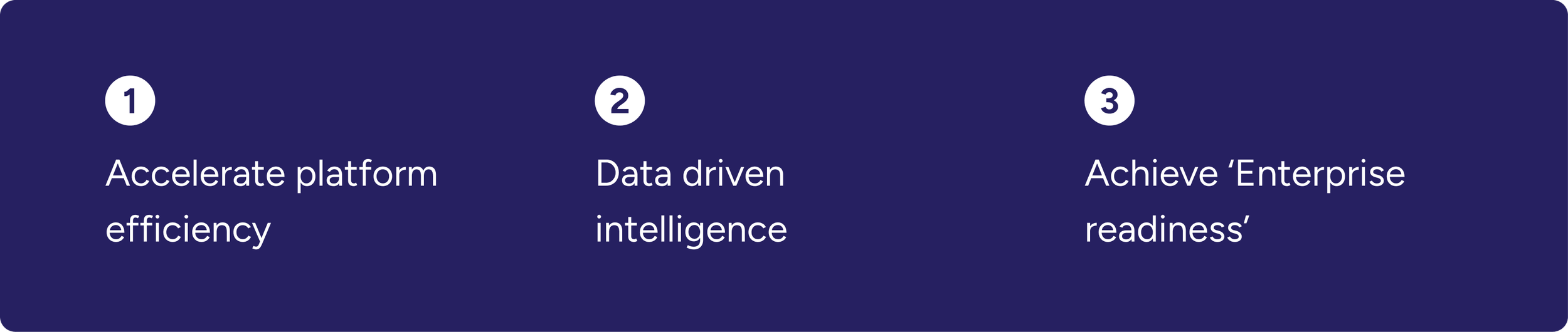
In 2025, Electric set out to strengthen platform stickiness and enterprise readiness as its customer base scaled
Electric is an all-in-one IT Operations Platform designed to help SMBs manage their entire technology stack - centralizing hardware procurement, IT and asset management. As the platform prepared to onboard larger, more complex organizations, the existing "flat" e-commerce flow became a bottleneck. To support this evolution, Electric focused on three core pillars:
THE PROBLEM —
Satisfaction had decreased as IT Admin users were struggling with to complete device procurement
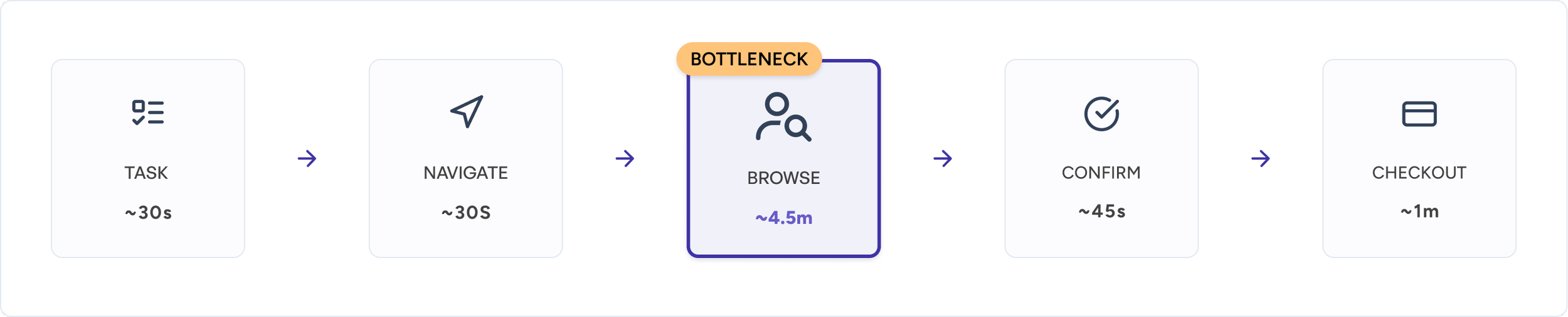
Admins were spending ~8.4 minutes from receiving an employee task notification to completing checkout.
THE SOLUTION —
‘Guided Selection' feature leveraging transaction history to validate purchases, creating a scalable, high-confidence retrieval engine for complex hierarchies
RESEARCH & DISCOVERY —
Identifying the bottleneck within IT device procurement
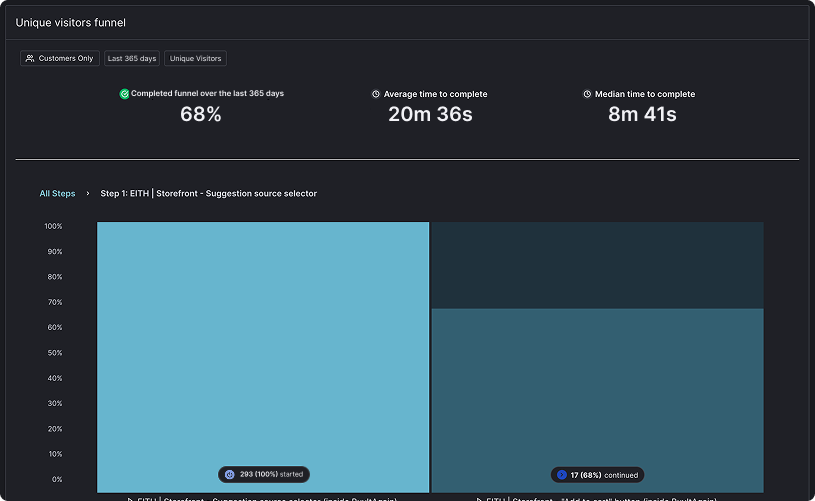
To get the ball rolling, I leveraged partnerships with stakeholders to explore value add opportunities. Utilizing Pendo, I also noticed that users spent the majority of their time (average 4 minutes out of 8 total) in the ‘Browse & Select’ phase - not navigating to the storefront, not on product detail pages, not in checkout. To understand the behavioral patterns causing the delay, I conducted mixed methods research: 20+ surveys and 9 in depth interviews and CX call shadowing. I uncovered…
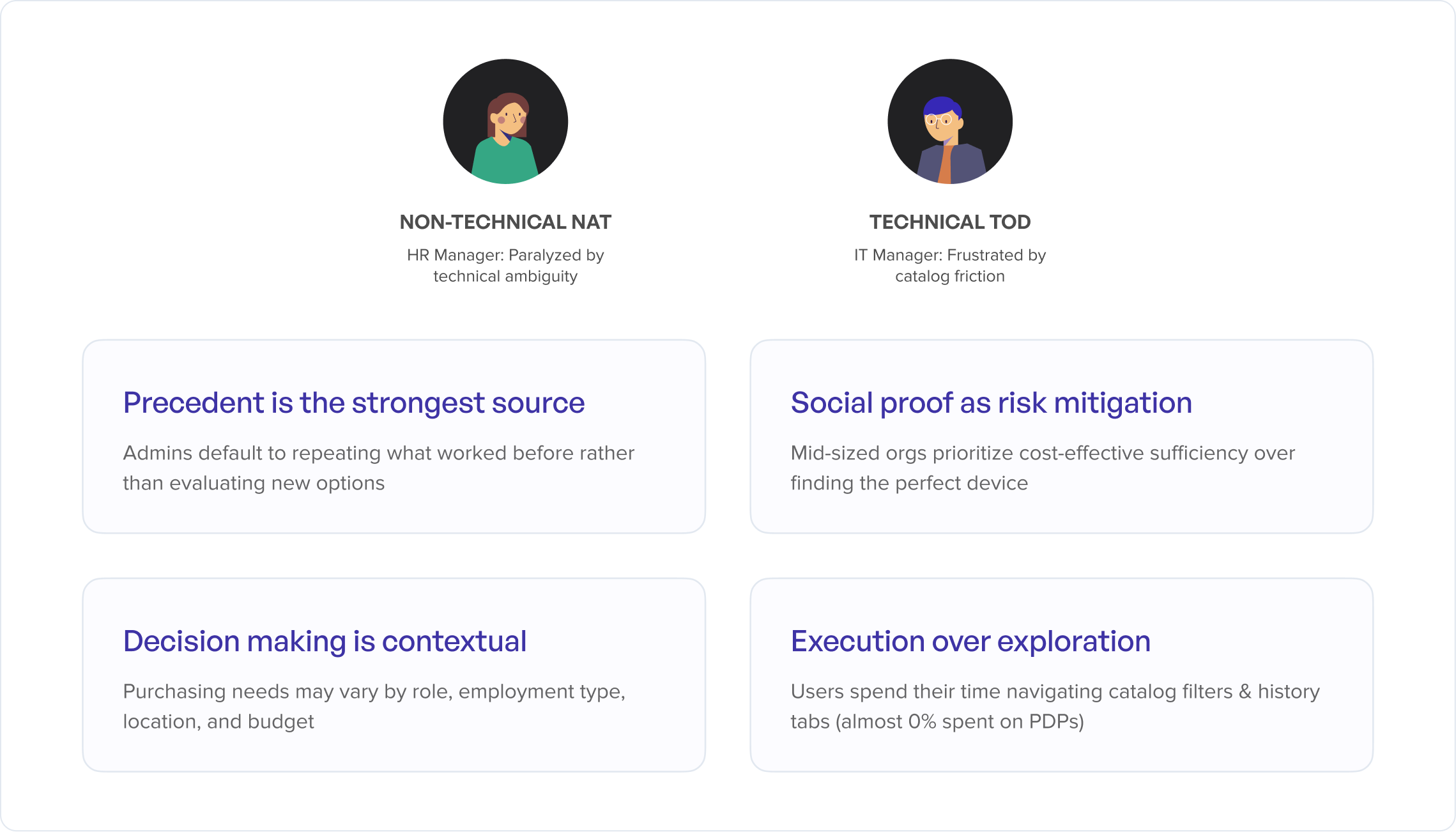
DEFINING THE OPPORTUNITY —
Transitioning from "search" to "standards"
The opportunity lies in evolving our catalog from a traditional discovery marketplace into a governance-aware platform. While the catalog must remain a space for exploration and revenue-driving discovery, we have a critical opening to reduce the "Defensibility Gap" - the friction between finding a product and knowing it's the "safe" choice.
HMW transform the procurement experience from an anxious manual search into a confident and efficient execution?
BUILD —
The friction within our current system & data architecture
During ideation of potential solutions, the path to getting there was blocked by a fragmented data architecture. To build a system that felt simple for the user, I uncovered systemic conflicts - like Group vs. Role logic and Nested Hierarchies - that were actually causing the user's manual friction.
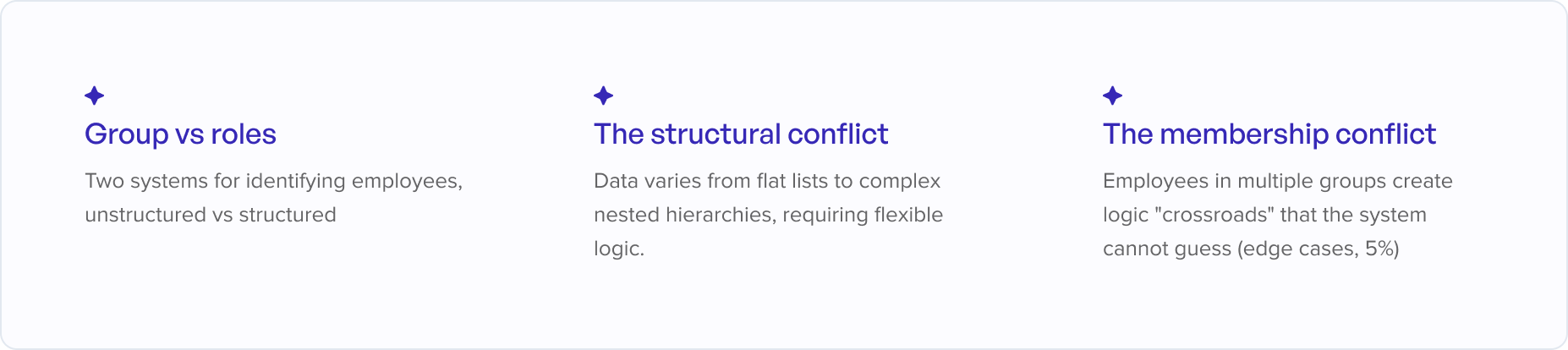
The strategic context we had to consider…
I led collaborative sessions to align initial multi squad, stakeholder roadmaps & constraints. Our customer base was in transition. Current users were primarily small - mid size companies (10-150 employees) with single IT admins making ad-hoc purchasing decisions. But we were actively onboarding enterprise customers (200+ employees) with dedicated IT teams who would have different needs and expectations.
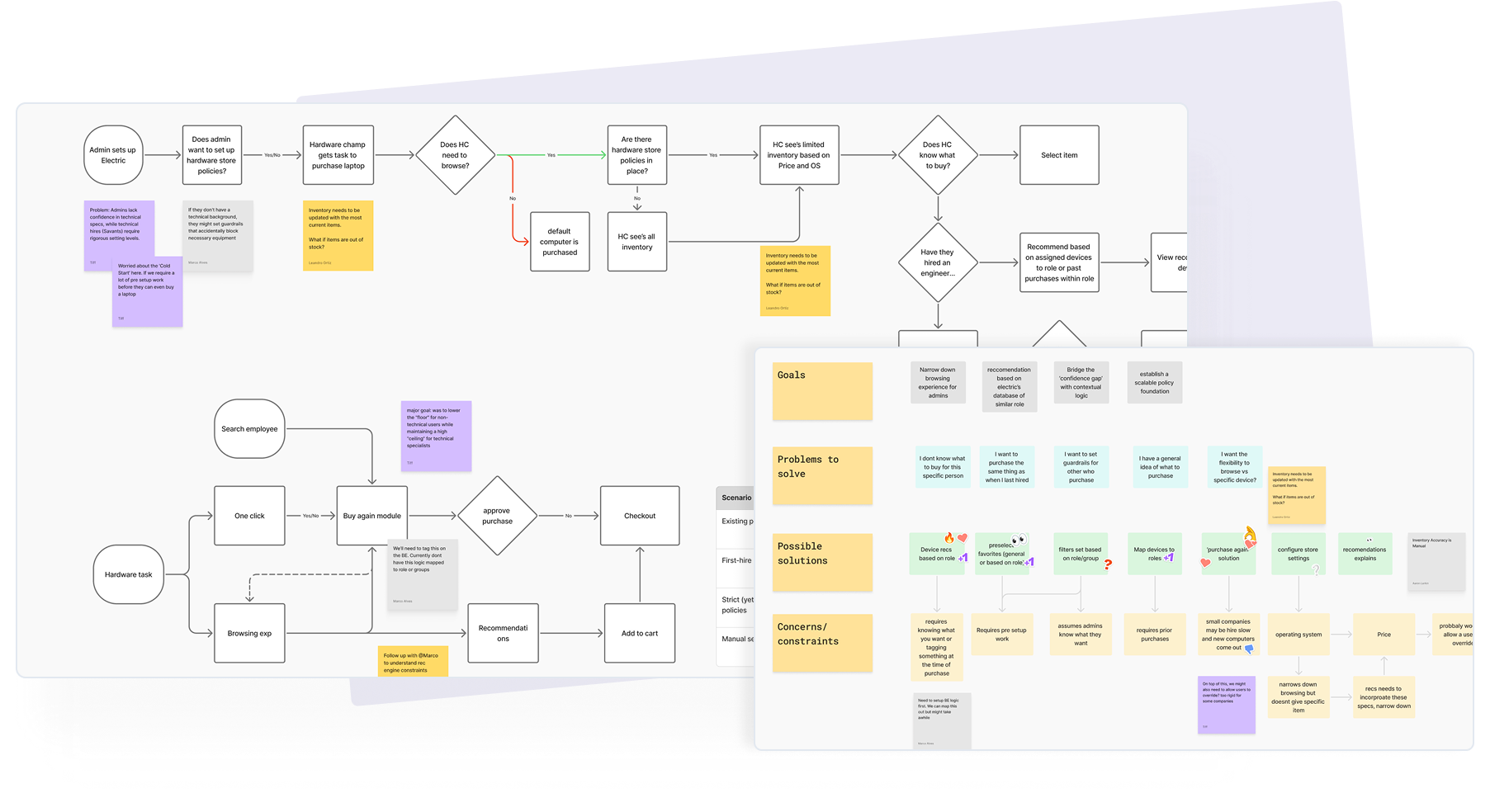
EXPLORATIONS —
With these constraints in mind, I led the exploration of three mental models
I worked with my PM to build a framework that solves for our current users while ensuring the system could handle the massive influx of data and users that the HRIS integration would bring. As we scale into larger organizations, the structural conflicts between simple flat lists and complex nested hierarchies become even more pronounced.
Exploration #1
Manual favorites by group
Pros: sense of control, no data dependency
Cons: Too manual (tagging), different group logic might be too confusing to navigate manually for users
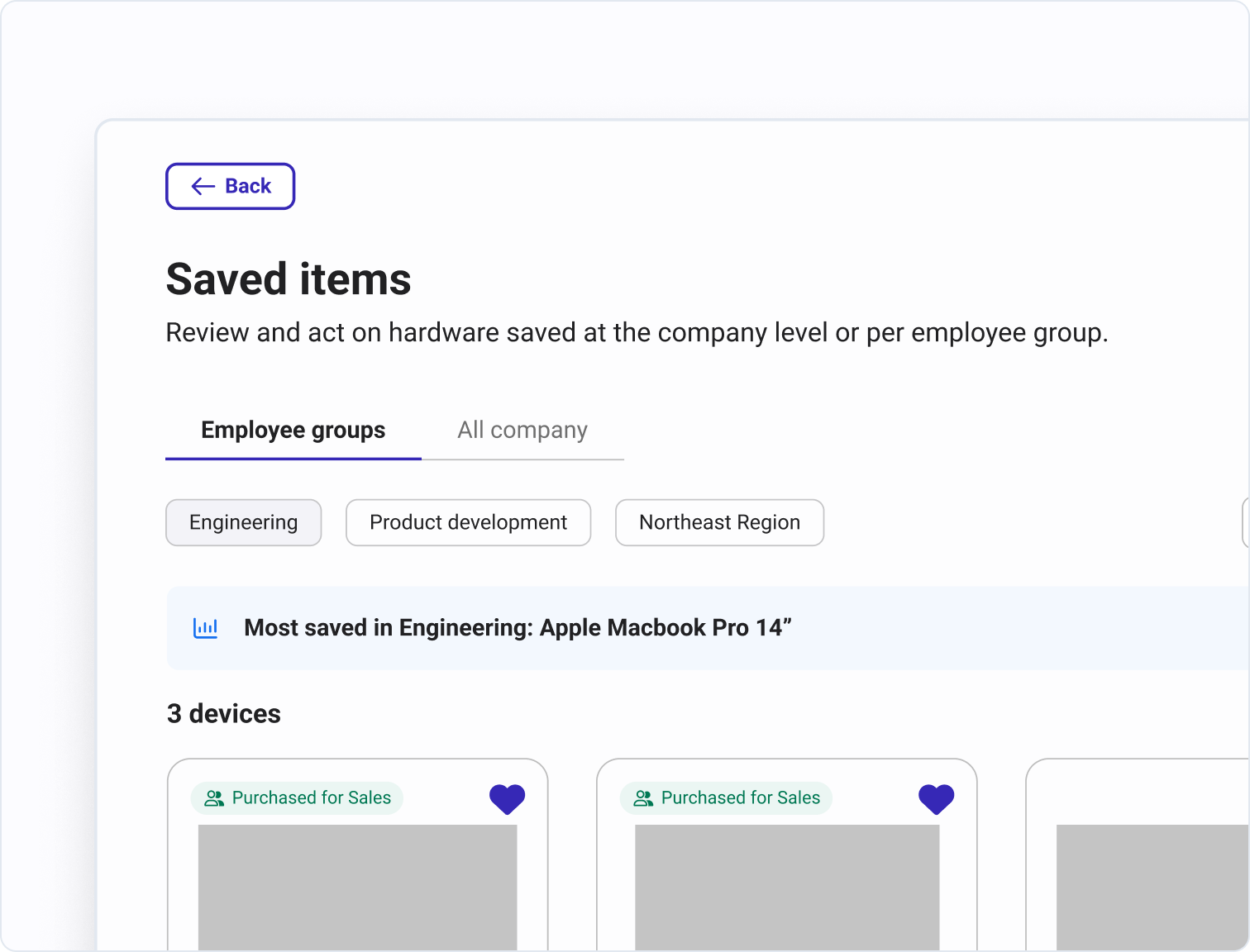
Exploration #2
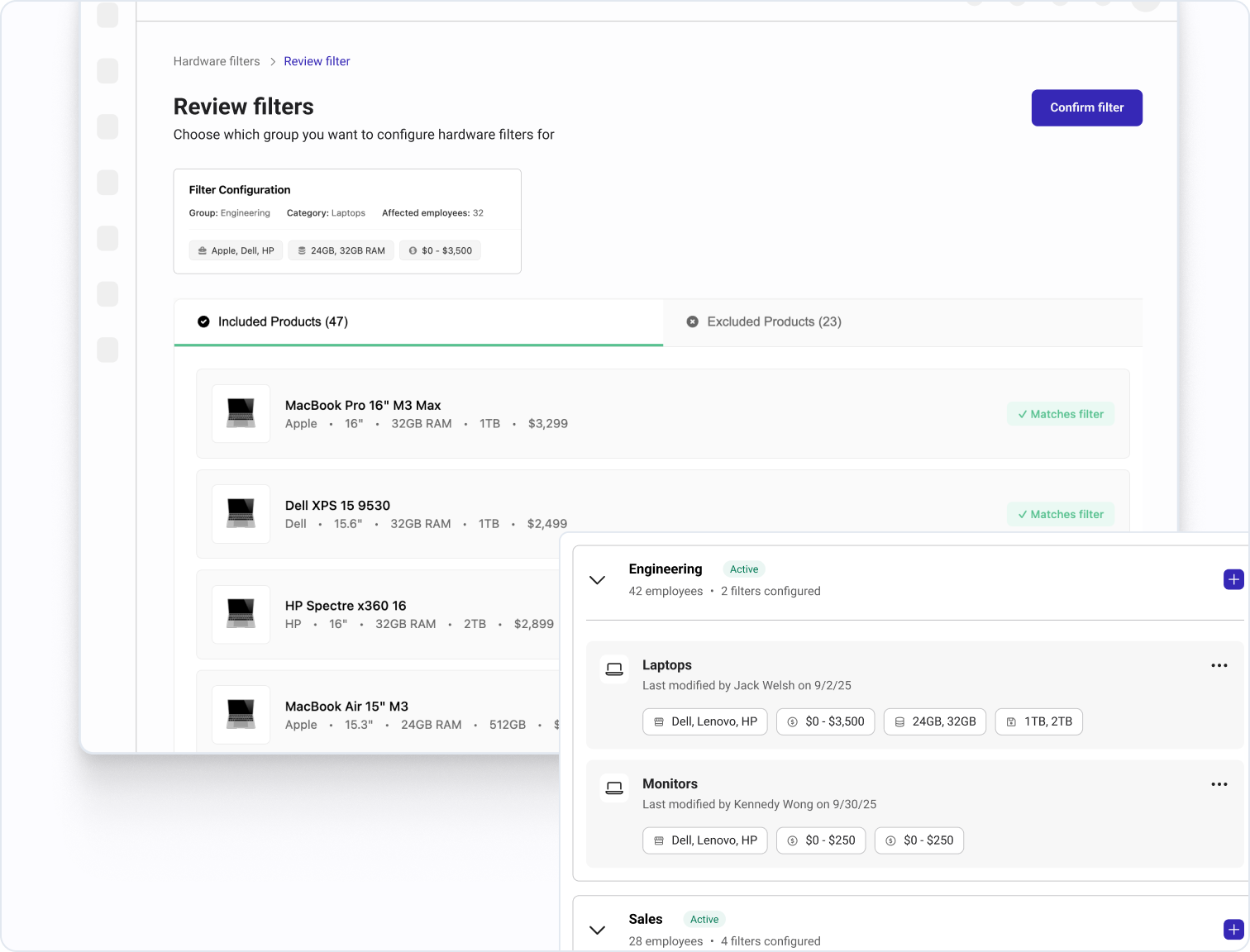
Administrative filters
Pros: Limits options to approved "standards” providing clarity for both user types. Enterprise scalability
Cons: Pre-set up work, too much top down control, would not benefit our current user base.
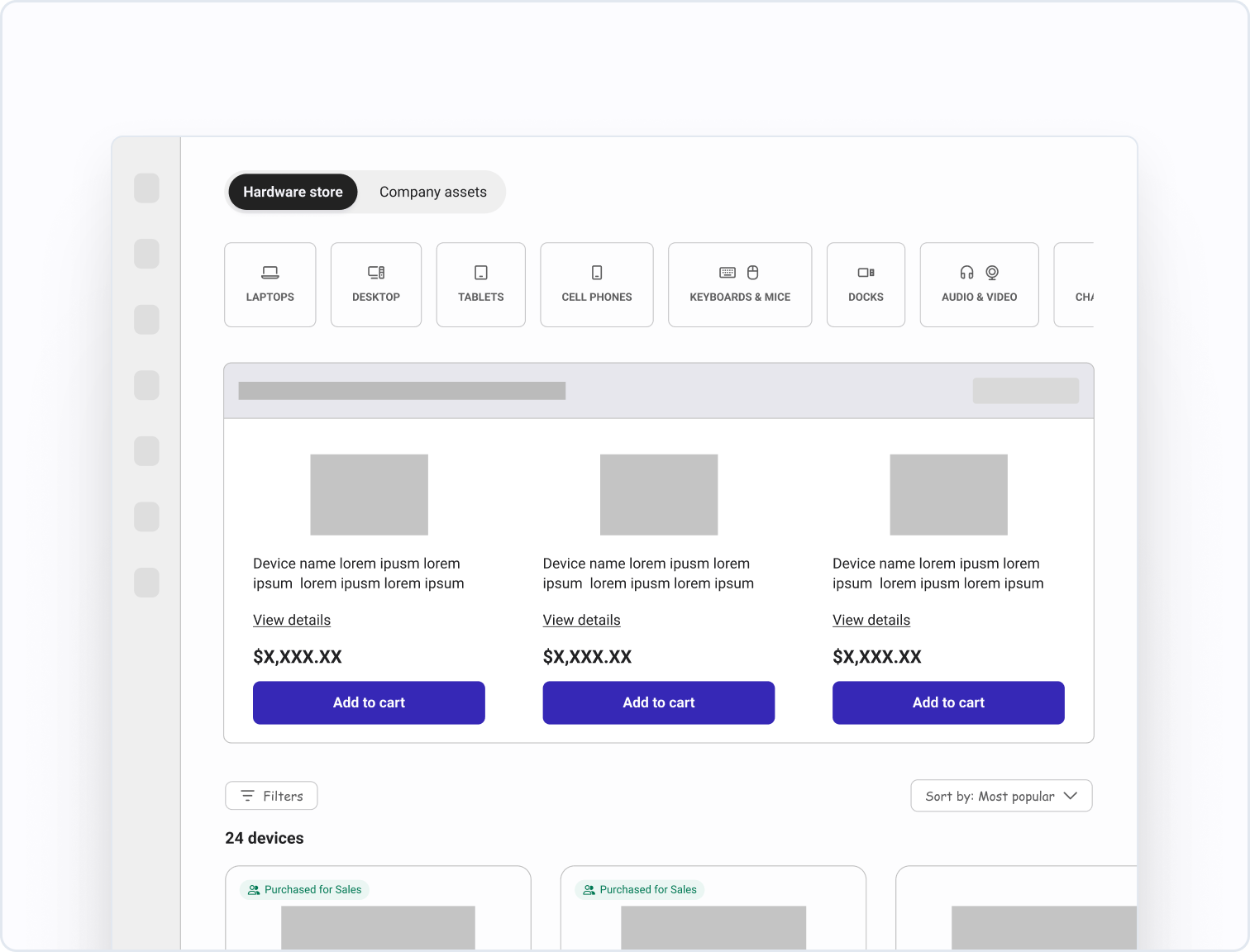
🏆 Exploration #3: selected!
Guided selection module
Pros: Zero setup for users, contextual intelligence, reduced time to value, and ability to scale.
Tradeoffs: Backend will require data mapping.
SYSTEMS UX CHALLENGES —
Designing for resilience & scalability: inheritance & multi-group logic
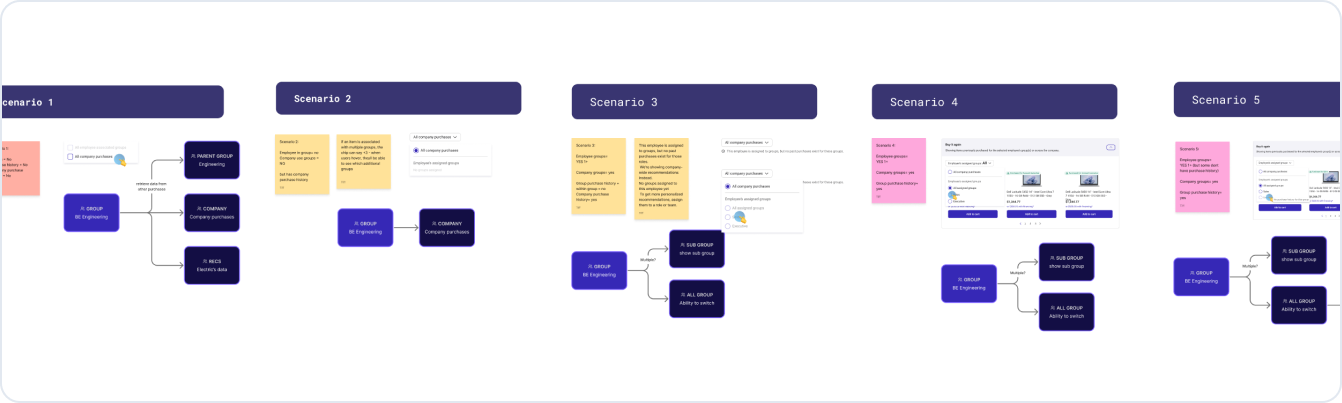
Once we aligned on Guided Selection Module, I designed system logic to resolve the three architectural tensions. For nesting, the system inherits recommendations from a parent group when a sub-group lacks history. For multi-group users, it defaults to the most specific group but allows admins to override.
THE IMPACT —
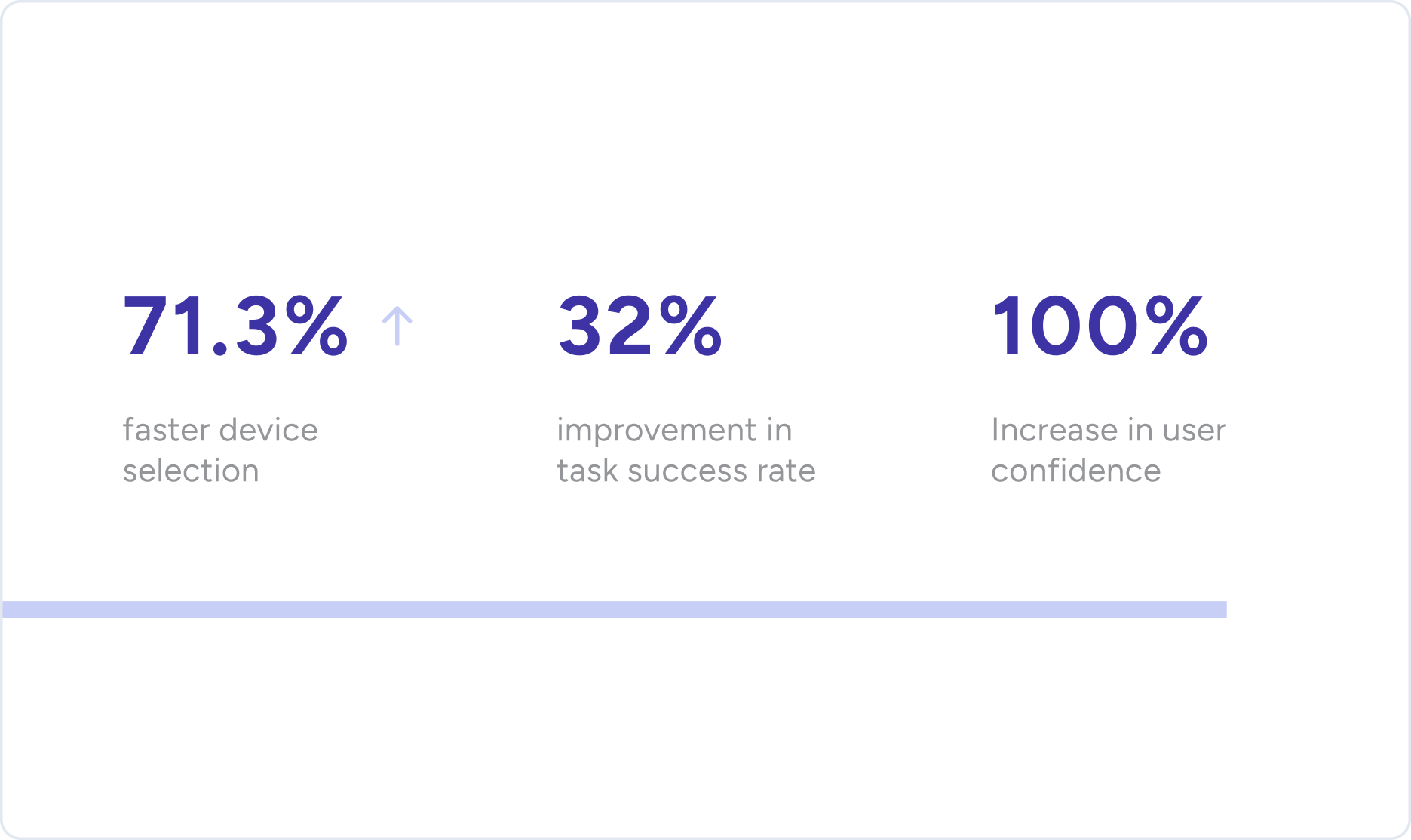
Task completion time reduced by 70%
The Guided Selection module simplified a previously fragmented device-selection workflow by helping IT admins quickly identify compatible hardware. By structuring the decision process and reducing guesswork, the experience made purchasing faster, clearer, and more confident.
Takeaways
LEARNINGS
Design for data states, not just user segments. The reframe from "mid-market vs. enterprise users" to "no data → some data → rich data" unlocked a scalable solution. By separating universal behavioral patterns (seeking precedent) from organizational variables (policy needs), we were able to design one system that evolves as companies mature rather than building separate experiences.
NEXT UP ↗