
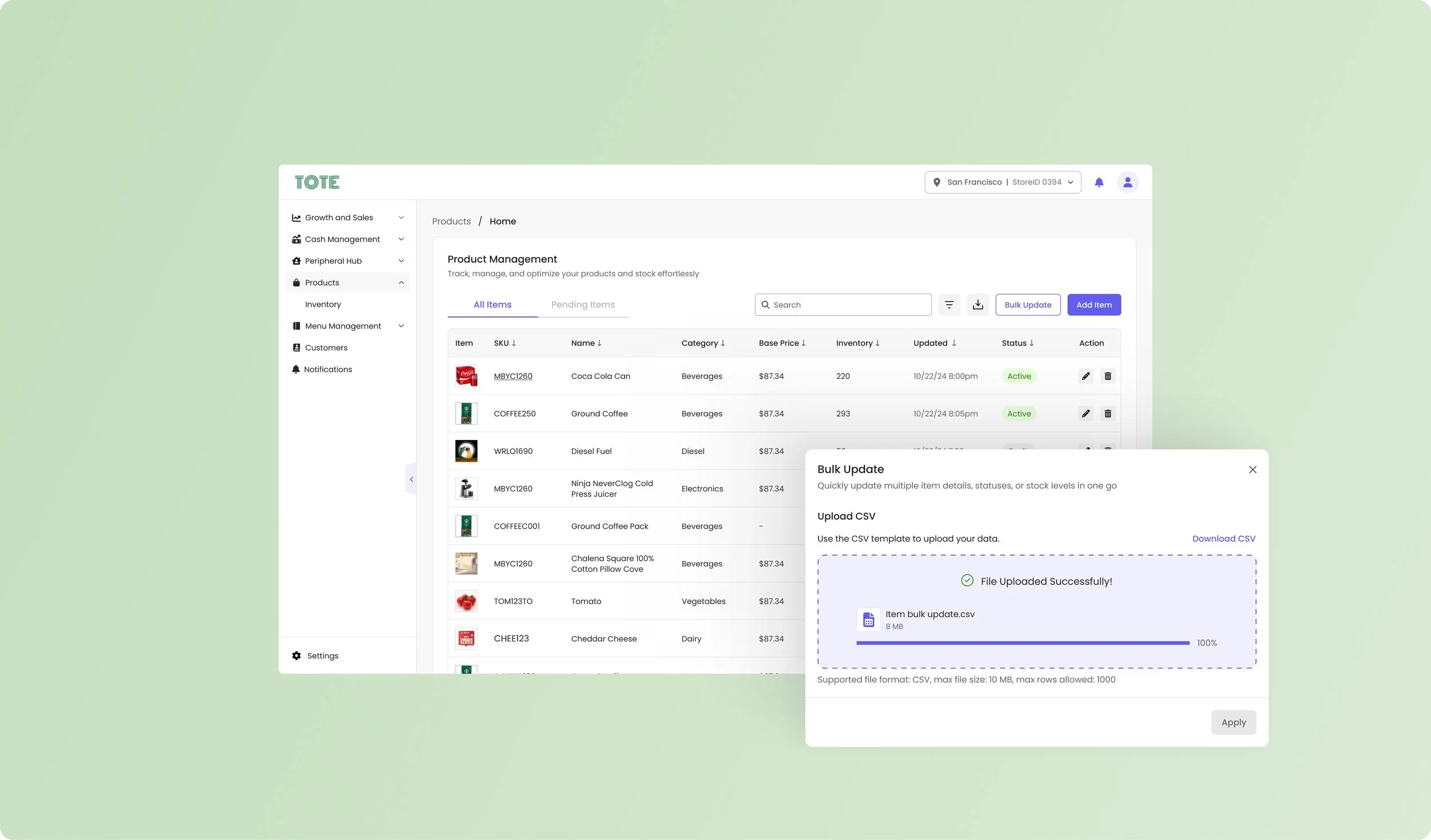
Reducing fragmentation in multi-store inventory management
OVERVIEW
This was a 0→1 initiative to launch an inventory management vertical for multi-location retailers at Tote. Completed in three months, the goal was to consolidate fragmented POS and backend systems into a unified operational foundation.
CONTRIBUTION AND OUTCOMES
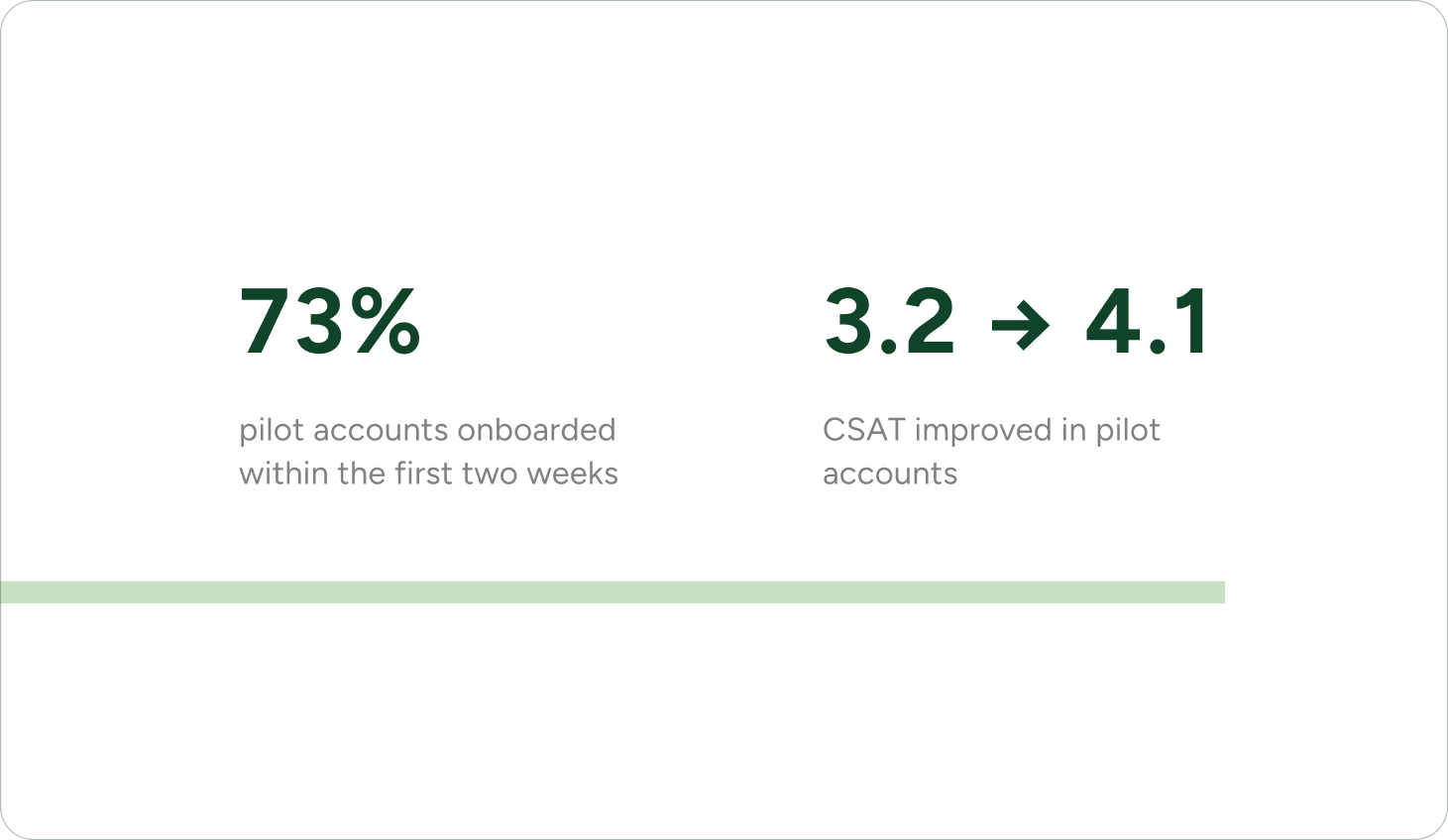
Led end-to-end design of Tote’s first centralized inventory system, unifying multi-store workflows into a scalable platform capability. 73% of pilot accounts onboarded within two weeks, with CSAT rising from 3.2 to 4.1, reflecting improved confidence and operational clarity.
MY ROLE
UX/UI Design, Strategy
THE TEAM
1 PM, 6 Engineers, CX
STATUS
Shipped 2024 | https://tote.ai/
CONTEXT —
About the company, Tote
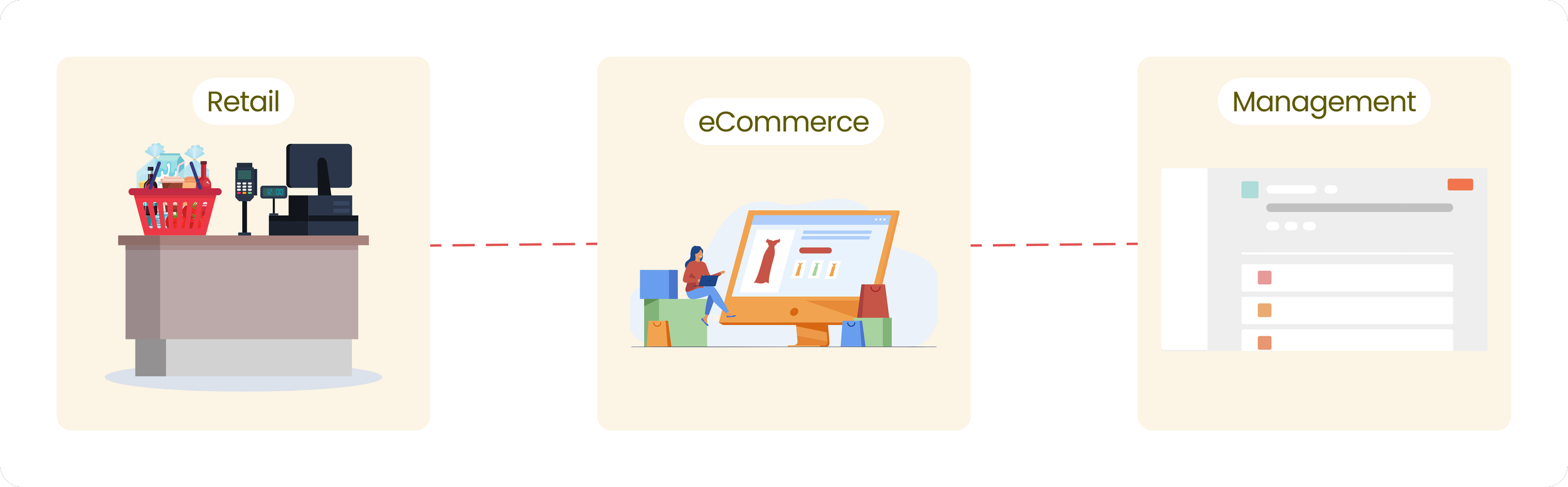
Tote started as a modern Point of Service (POS) system for large retailers. But over time, it became clear that many of Tote’s clients needed more help managing their operations behind the scenes.
THE BUSINESS CHALLENGE —
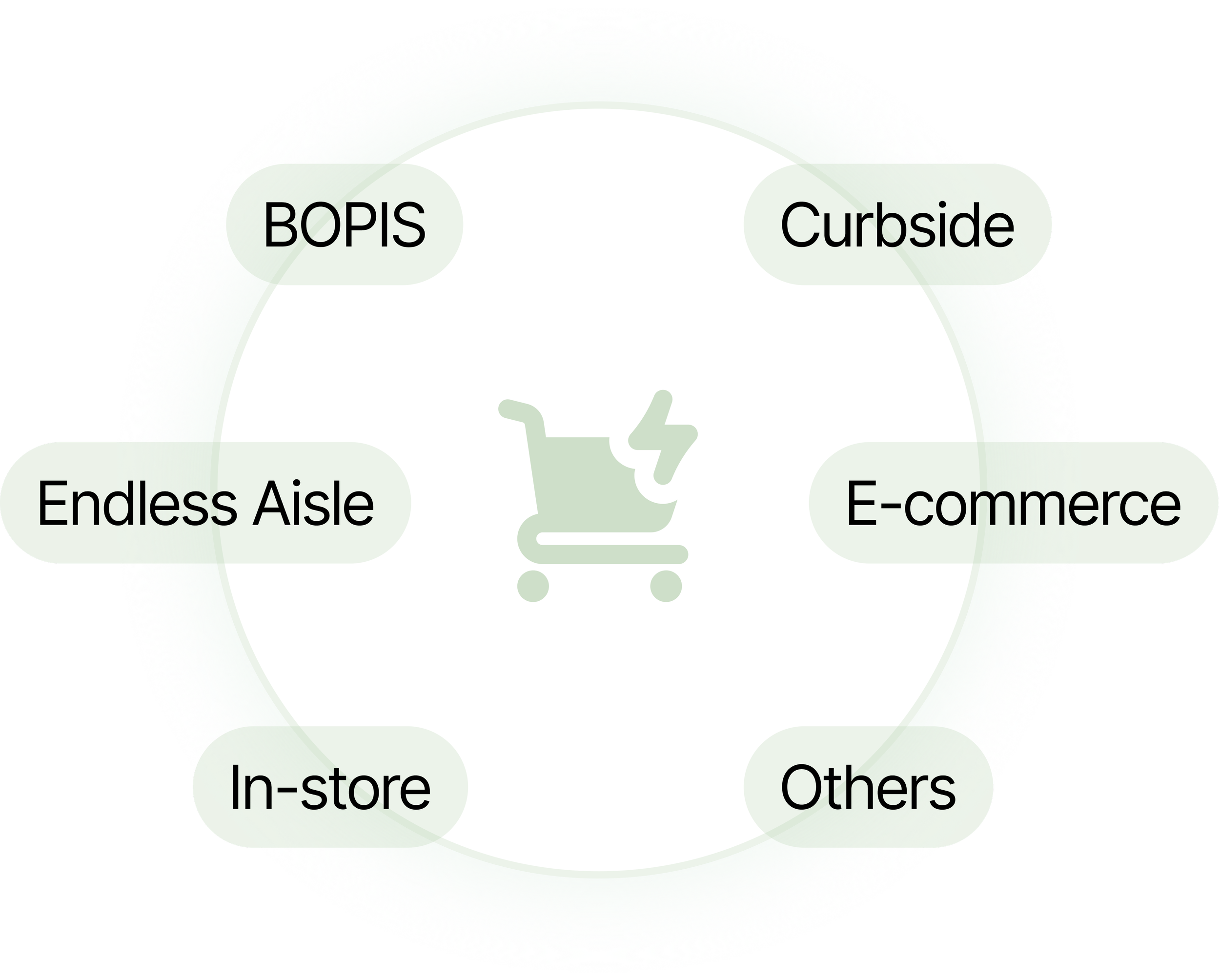
Unlocking platform growth beyond Point of Sale (POS)
Tote’s POS product was effective at the point of sale, but limited the company’s ability to support larger retail operators with complex, multi-location operations. Inventory management represented a new vertical that increased platform value, unlocked expansion revenue, and reduced reliance on transactional POS usage alone.
THE SOLUTION —
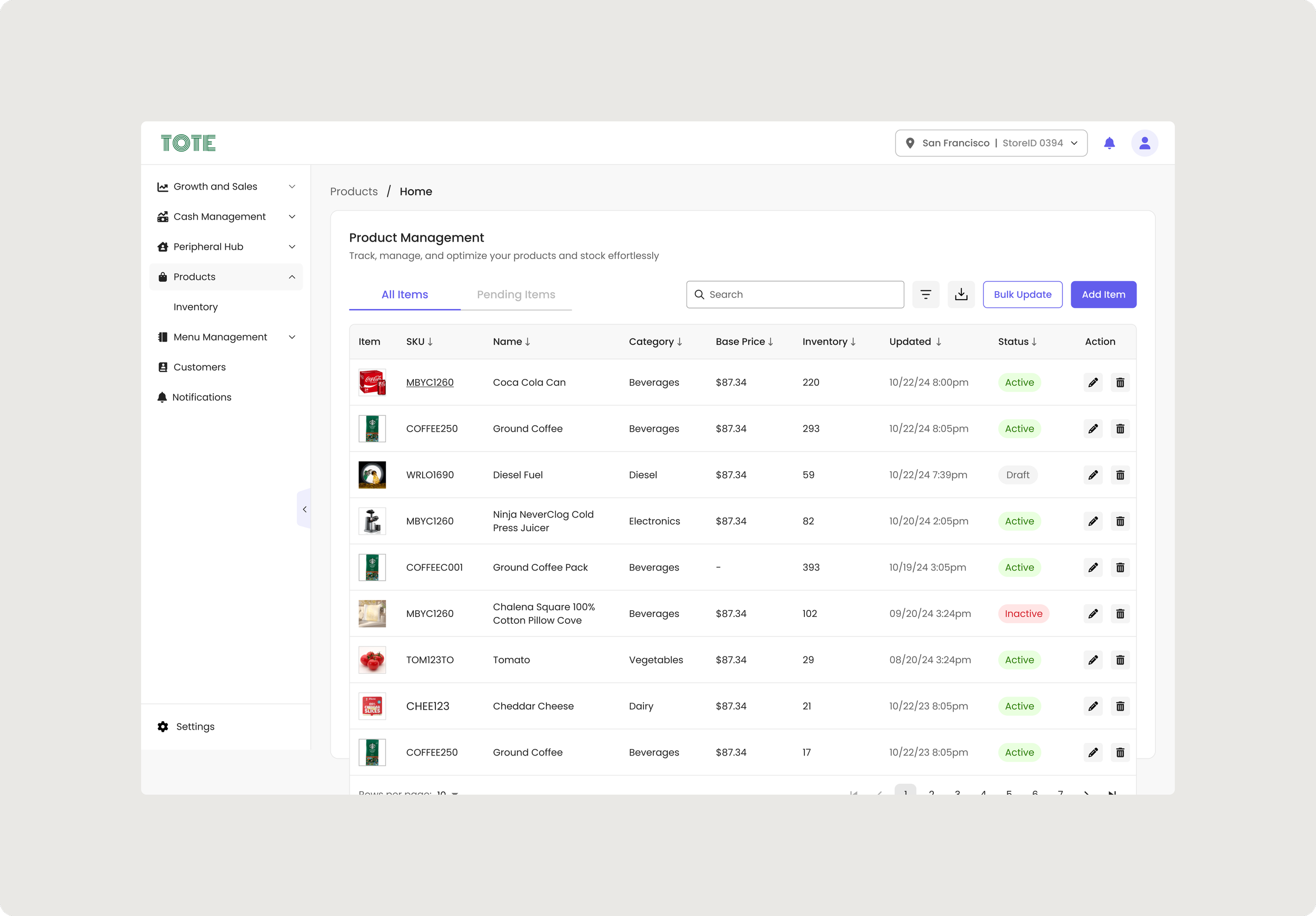
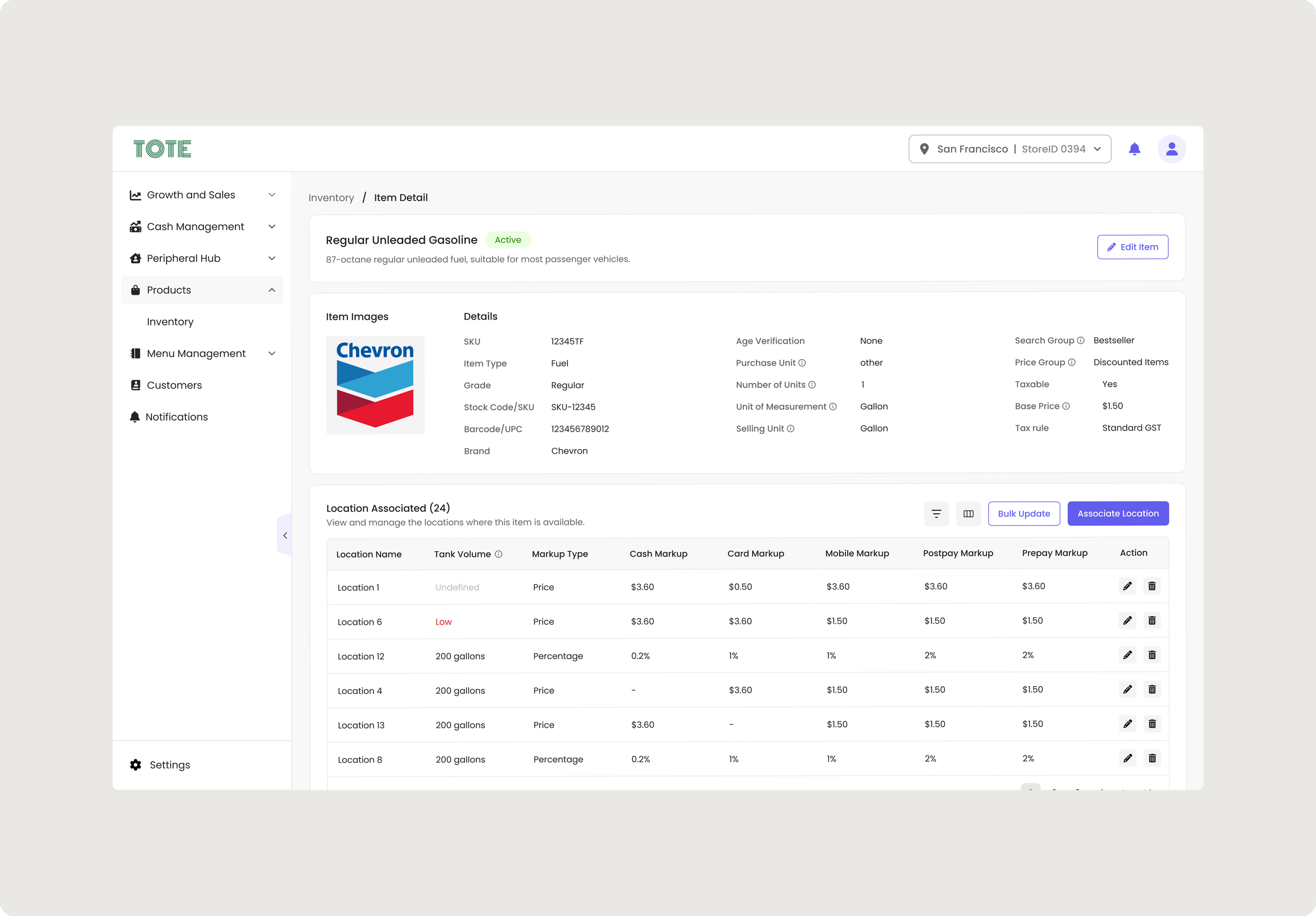
A centralized product and inventory management system that decouples products from individual stores.
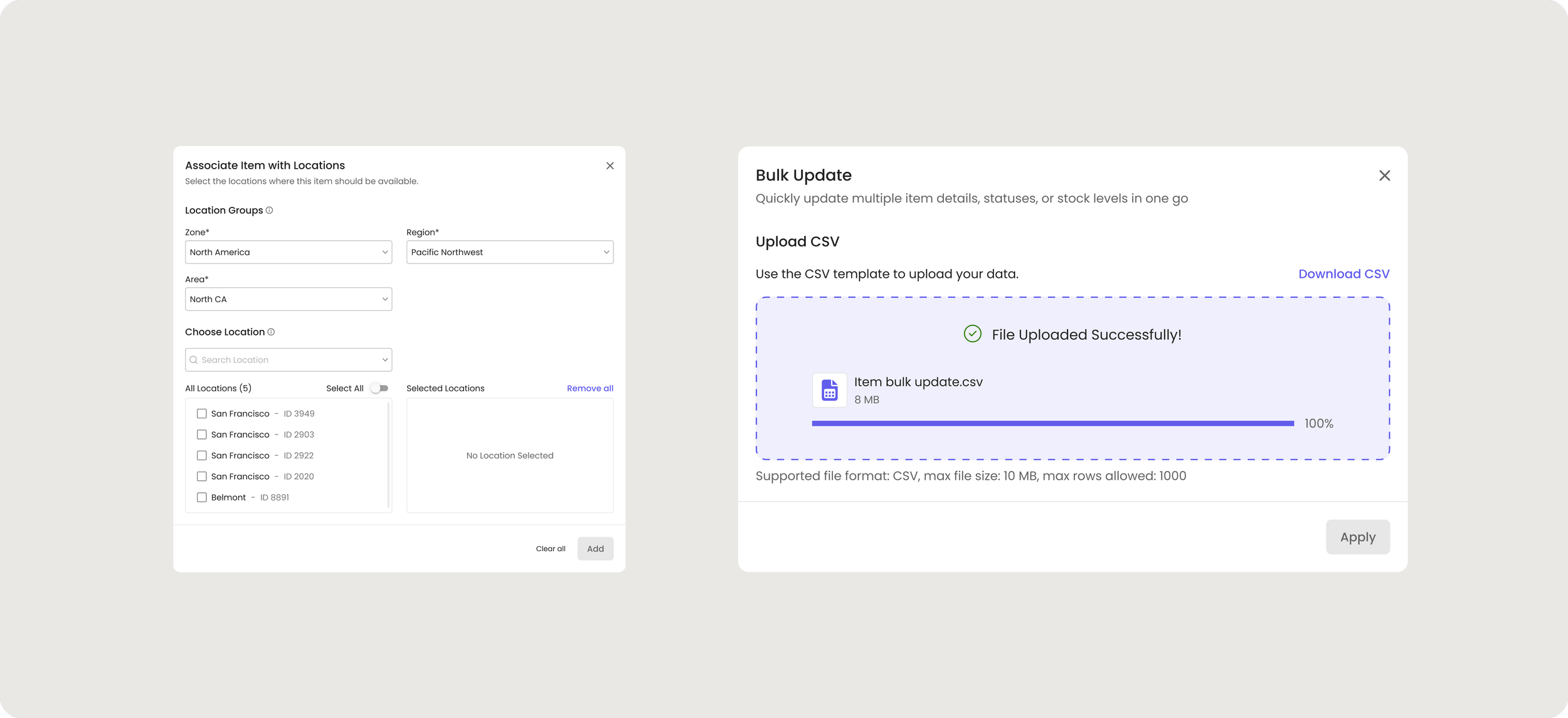
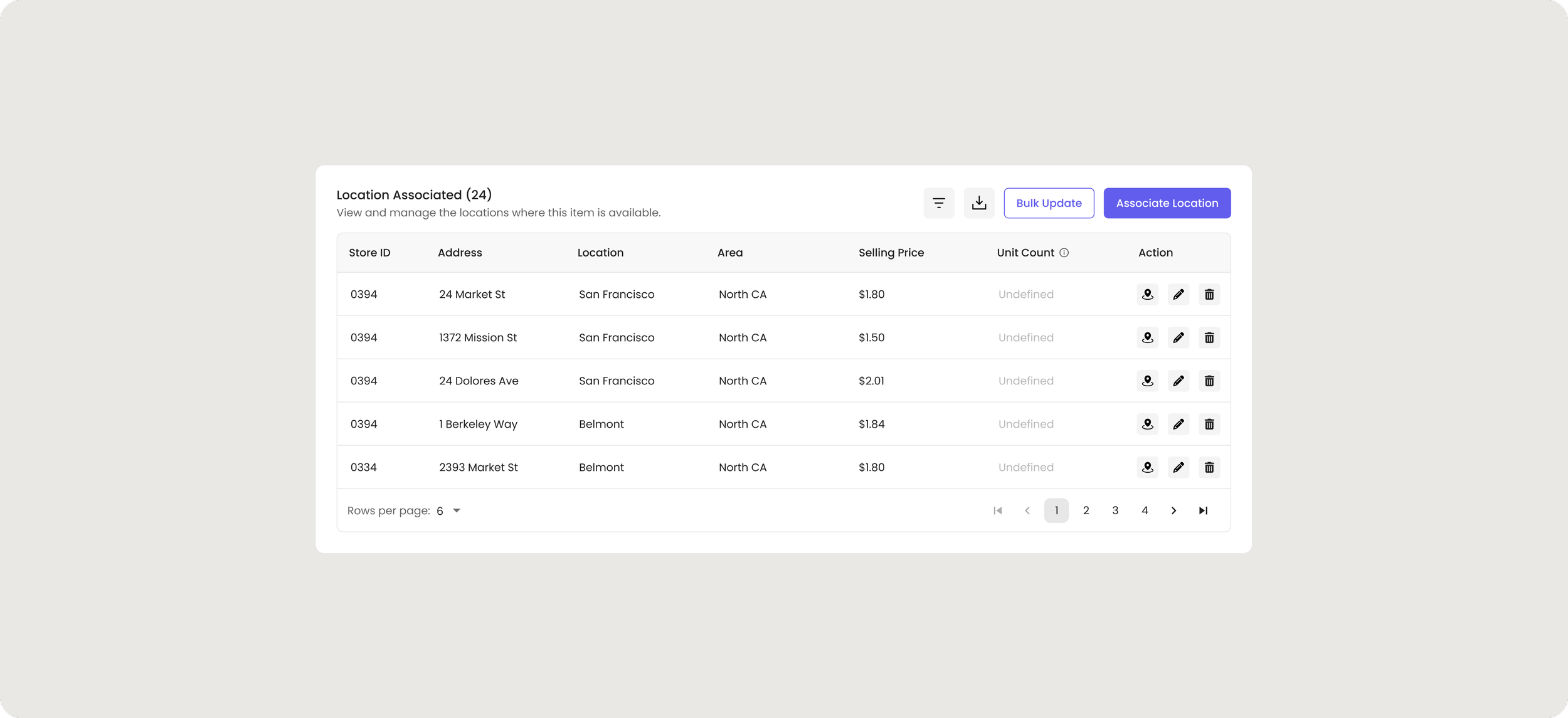
The system allows regional teams to manage products across multiple locations from a single interface, with bulk operations, POS-integrated visibility, and role-aware access built in.
THE IMPACT —
Signals of platform value
Early adoption across pilot accounts showed strong engagement, with regional managers regularly using multi-location and bulk workflows to manage products at scale. Post-launch feedback indicated improved confidence and reduced operational friction, validating inventory management as a viable new platform capability.
Takeaways
LEARNINGS
New verticals require system clarity before feature depth. Establishing a clear, centralized product model helped unlock faster iteration and reduced downstream complexity across roles and locations.
Designing for scale means prioritizing the most complex user first. Optimizing for regional managers created a foundation that could later support store-level and associate workflows with minimal rework.
EXPLORE MORE WORK ↗